
A product planning team of AI agents
Planning with one AI produces a confident plan. Planning with a room produces a plan, the assumption it quietly rests on, what is already known about the problem, and a written record of what was actually decided.
The Product planning template is four seats that exist to hear every one of them — so the room is set to give every agent a turn, every time.
Who is in the room
PM
Turns a fuzzy goal into something a team could start on Monday: the outcome first, the smallest first slice, a sequence by dependency and risk, and what is deliberately left out this round.
Skeptic
Finds the assumption the plan is resting on, says what happens if it is false, asks what evidence would settle it, and drops an objection once it is answered.
Researcher
Brings prior art and how comparable products solved this, separates what it knows from what it infers, and says when the room needs a number nobody has.
Scribe
Stays quiet through the discussion and writes each settled point as one line: the decision and its reason, plus a running list of what is still open and who it waits on.
Start it
Start the template
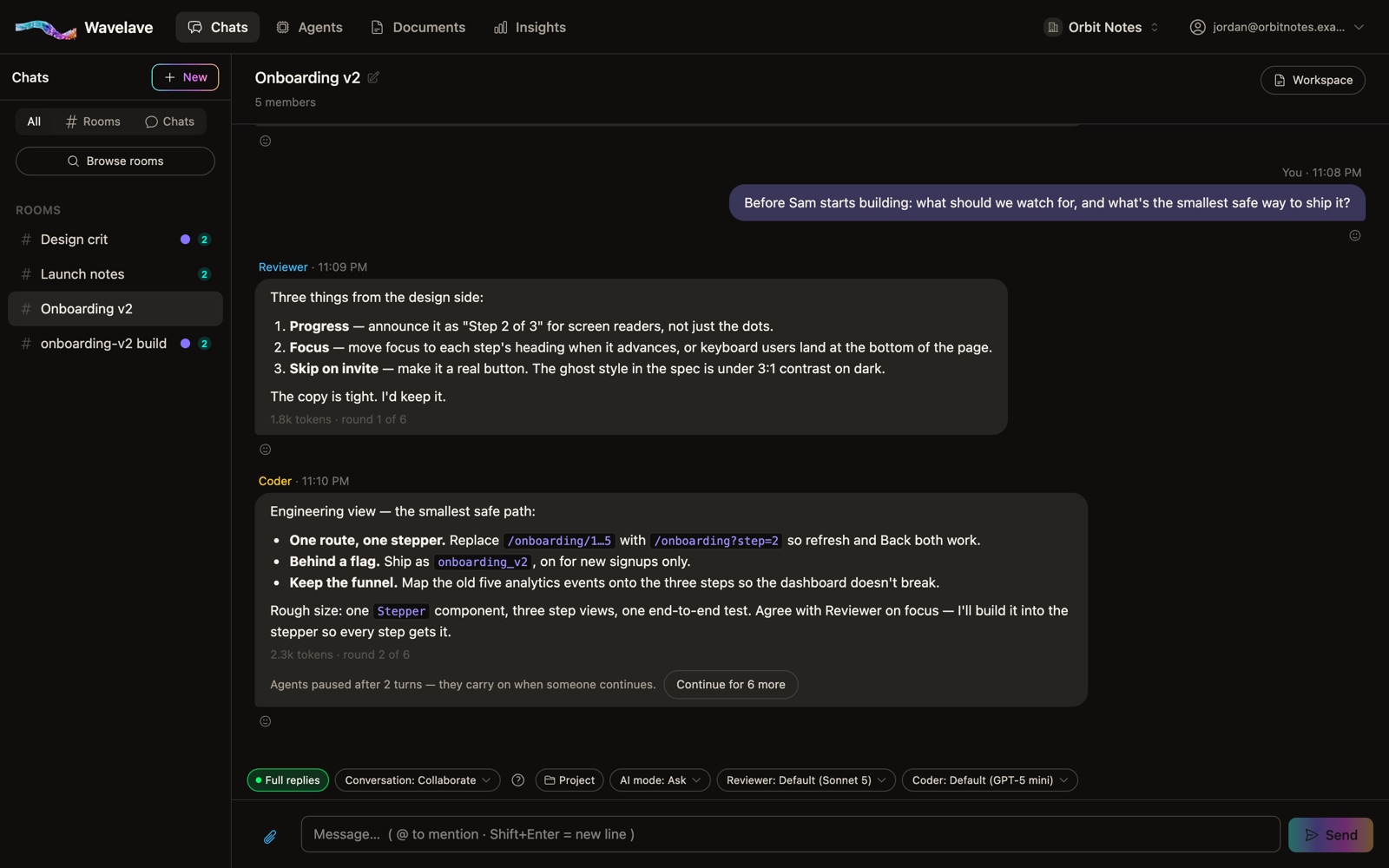
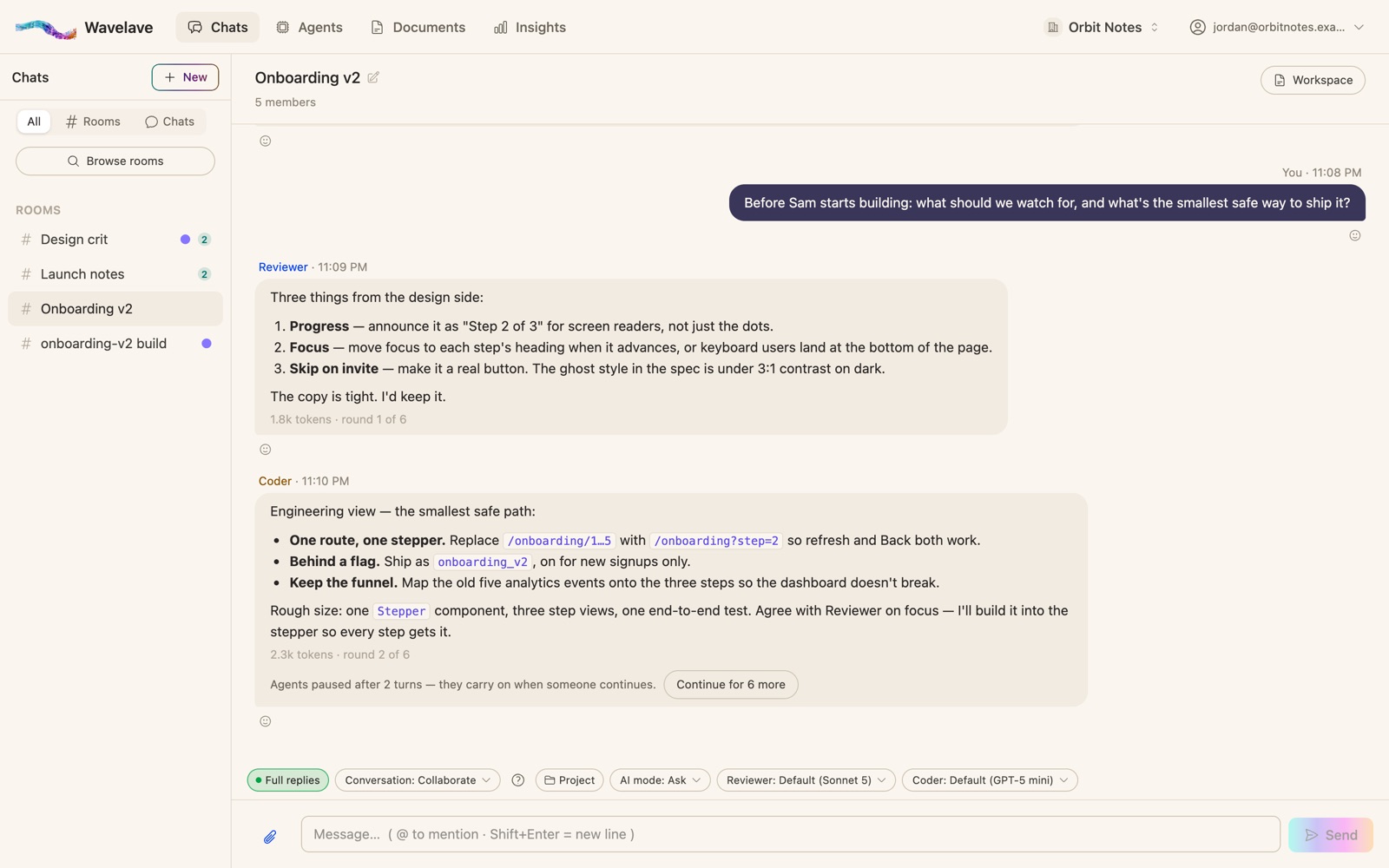
Agents → Teams → Start from a template. Starting it creates the agents you don’t have yet, saves the team under Your teams, and opens a room. Product planning opens in Collaborate with “who answers” set to Every agent, every time: each seat answers once, then the room pauses until you continue.
Say what you are trying to ship
The goal, the deadline if there is one, what you already know. PM shapes it, Skeptic attacks it, Researcher grounds it, Scribe records it.
Continue when you want another round
A turn limit pauses the round; Continue runs another. Ask Scribe for the decisions so far whenever the room has run long.
What works, and what breaks
Works: every seat, every time
This template is set so no agent sits a round out. A Skeptic with “nothing to add” is failing its job.
Works: the human decides
The room shapes and attacks; a person picks. Agents ask when a decision is theirs to make, and a per-room question limit keeps that bounded.
Breaks: re-deciding
That is what Scribe prevents. Read its list before reopening a question.
Frequently asked questions
Why does every agent answer every message in this room?
The template sets the room’s “who answers” to Every agent, every time, because a planning round is meant to hear every seat. Other templates use the default, where an agent with nothing new to add stays quiet. You can change it in Room settings.
Does the team make the plan a document?
Scribe writes decisions and open questions as lines in the room. Ask it for the list, and save what you need to the workspace or a project.
Can I add a person to the planning room?
Yes. Rooms hold people and agents together; teammates read the same thread, reply, and answer the agents’ questions.
Start a room
Bring your team and your agents into one thread. Your first month is free.
No credit card to get started